How to diagnose
and fix retention time
fluctuations
Dr. Anna Cooper, Shimadzu UK
Expert troubleshooting: Tips for stable HPLC retention times and reliable results
If retention times in high-performance liquid chromatography (HPLC) drift or fluctuate, even selective detectors cannot guarantee correct identification. Controlling and understanding retention time is therefore essential for robust HPLC methods. This article – the second in a series on troubleshooting for users of lab instrumentation – introduces the major factors that cause retention time fluctuations and offers practical ways to diagnose and correct them.
Troubleshooting HPLC retention time fluctuations
Retention time is one of the most important parameters in high-performance liquid chromatography (HPLC). It is used to identify analytes, to check system suitability and to judge method robustness. Modern HPLC systems typically use UV-Vis, fluorescence or refractive index (RI) detection. While optical detectors such as UV-Vis and fluorescence are often highly selective for compounds with chromophores or fluorophores, they all rely on one fundamental assumption: that the chromatographic system produces reproducible retention times.
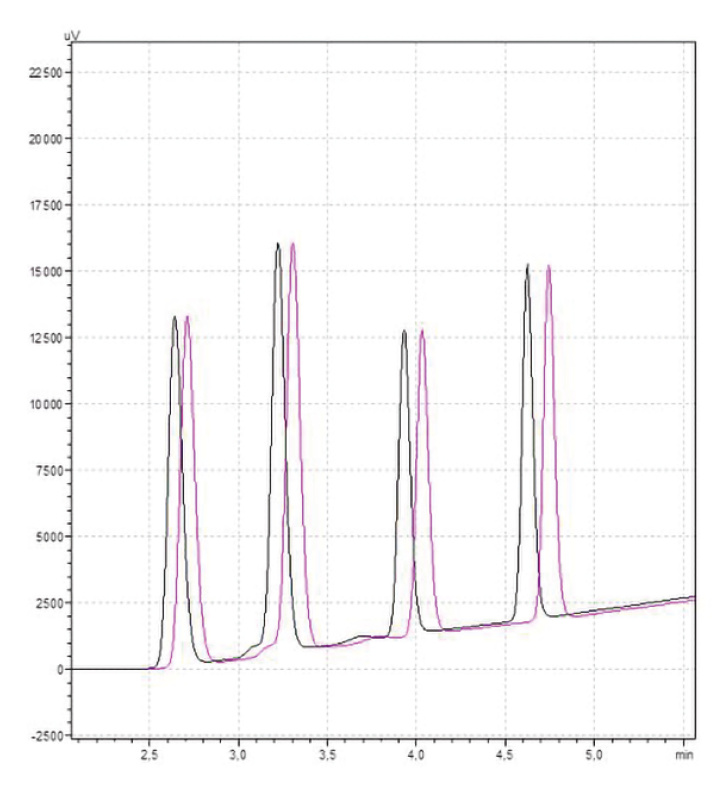
If retention times drift or fluctuate, even selective detectors cannot guarantee correct identification. Peaks may fall outside the predefined time window or even swap elution order, leading to ambiguous or incorrect results. Controlling and understanding retention time is therefore essential for robust HPLC methods.
What are the main causes of retention time fluctuations, and how can they be identified, fixed or even prevented?
1. Temperature – a silent but powerful parameter
Temperature has a direct influence on retention in both reversed-phase and normal-phase HPLC. As temperature increases:
• the viscosity of the mobile phase decreases;
• column backpressure falls;
• the interaction between analyte and stationary phase is altered.
A common rule of thumb is that a change of 1 °C can shift retention time by about 1–2 %, with late-eluting analytes usually being affected more strongly than early ones. In practice, this means that a seemingly minor fluctuation of 3–5 °C can noticeably change total runtime and elution order.



For larger analytes, temperature can also induce conformational changes (e.g., partial unfolding or rearrangement of secondary/tertiary structure), exposing or masking interaction sites and thereby affecting retention, selectivity and peak shape.
Shorter run times are not always advantageous
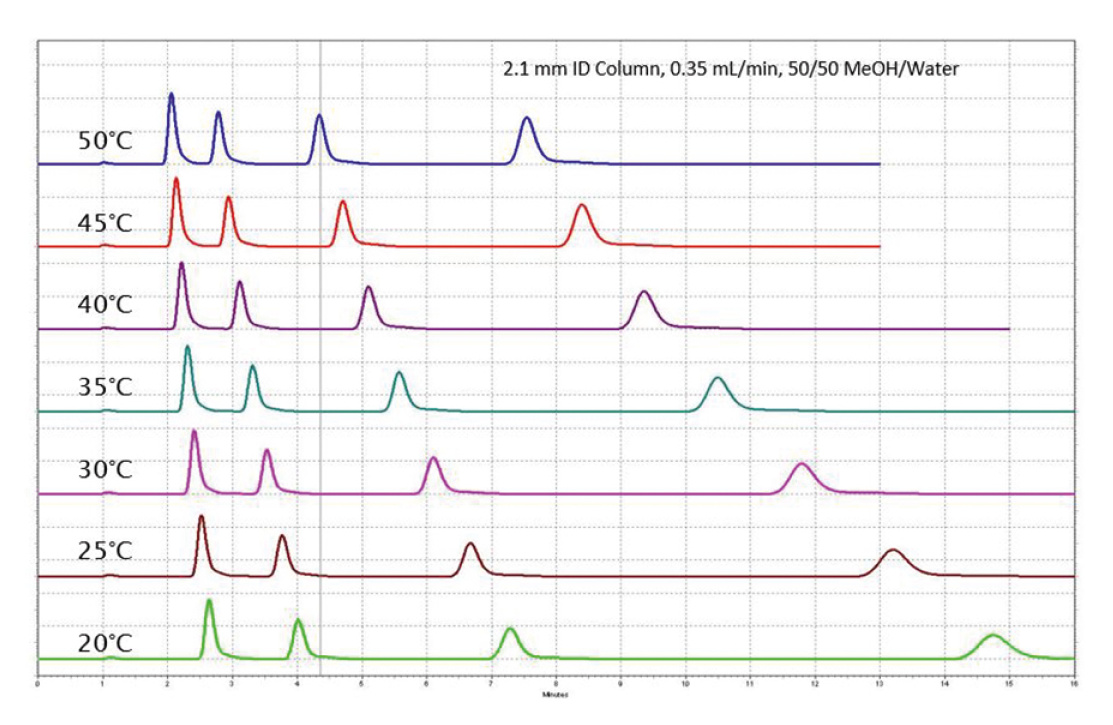
Chromatograms of paraben mixtures measured at 20 °C and 50 °C typically show that the overall analysis time at 50 °C is almost halved. This can be useful when wishing to speed up a method, provided the column’s maximum temperature is respected. However, higher temperatures can reduce column lifetime by creating a harsh environment for the silica backbone, particularly with acidic or neutral pH conditions.
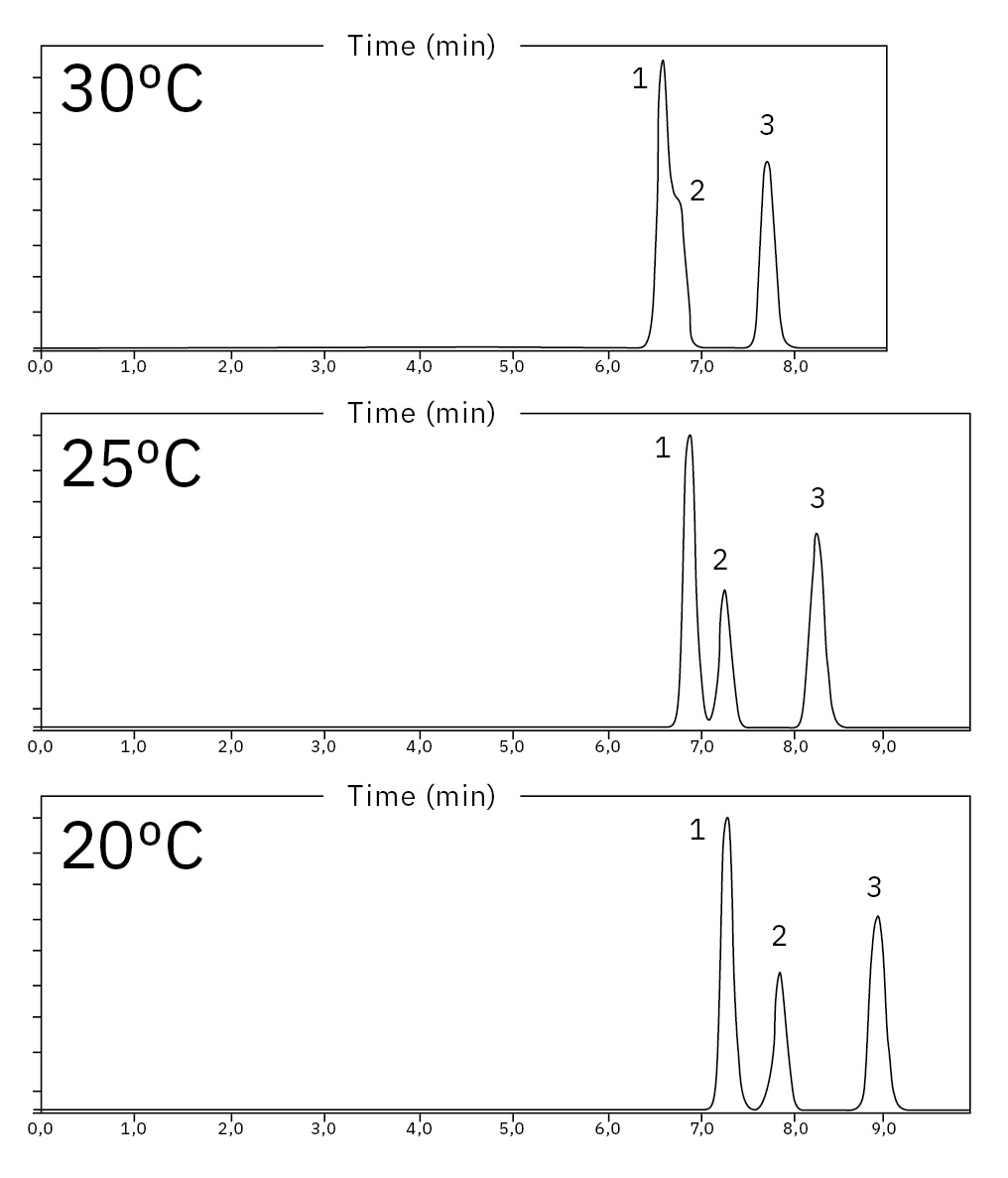
Temperature changes do not affect all analytes equally. For example, sorbic acid and benzoic acid might be baseline-separated at 20 °C but coelute at 30 °C, and further temperature increases may even reverse their elution order. If such effects are not noticed, samples can be misidentified or reported incorrectly.
2. Flow rate – diagnosing pump-related retention drift
The second major factor controlling retention time is the flow rate. In both gradient and isocratic runs, the retention factor and the gradient profile are expressed relative to the flow rate. Any deviation from the programmed flow has a direct effect on retention time.
Wear and tear in the pump
HPLC pumps contain consumable parts such as:
- Piston seals
- Check valves
- Pump heads and pistons
Over time, these components wear and may become leaky or fail to seal properly. The result is a flow rate that is lower or unstable compared to the set value. Retention times begin to drift or scatter, often accompanied by pressure fluctuations.

Simple pump check
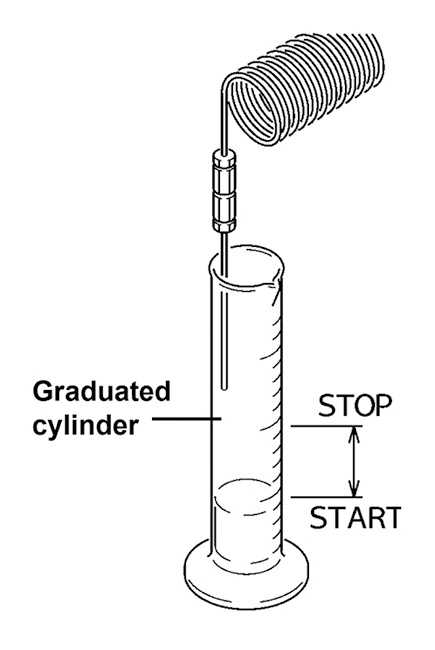
The easiest way to check the pump performance is by calibrating it. Use a graduated cylinder and connect a backpressure capillary directly to the pump, setting a defined flow rate. Then compare the time it takes to deliver a specified volume against the expected flow rate to check for discrepancies.
Significant deviations indicate that seals, check valves or other pump components may require maintenance or replacement. It’s important to regularly inspect the consumables in your HPLC system and keep spare parts on hand to quickly replace any faulty components.
Practical tips:
- Establish a regular pump calibration routine and document results.
- Replace piston seals, check valves and other consumables at defined intervals or when flow problems are suspected.
- Monitor system pressure and flow-integrated readouts; unstable baselines or erratic pressure are often early warning signs.
3. Eluent effects – the mobile phase as a source of drift
In many laboratories, retention time fluctuations can be traced back to the mobile phase. Even small changes in composition, density or preparation procedure can significantly alter elution strength.
3.1. Inadequate re-equilibration in gradient runs
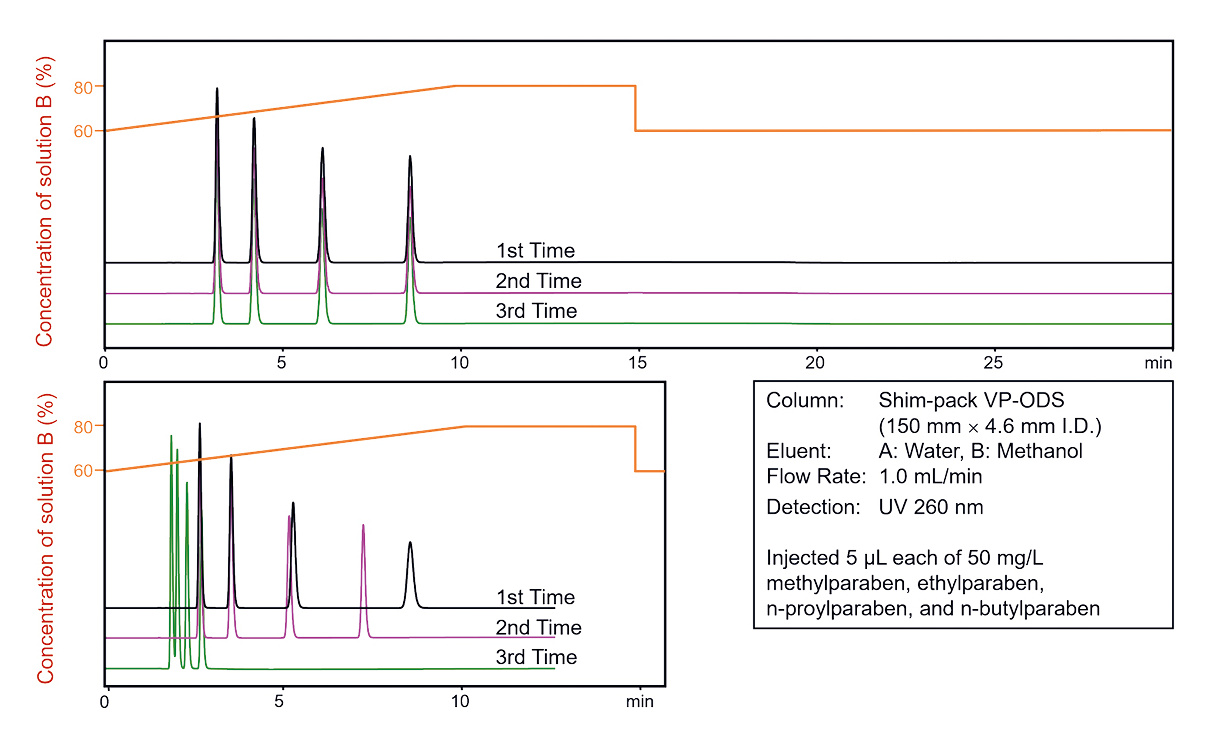
Reversed-phase methods often use gradients and a strong organic wash step to remove strongly retained analytes. After such a step, the column must be fully re-equilibrated to the initial conditions before the next injection.
If the equilibration time is too short:
- the column will contain a significant fraction of the strong solvent;
- the effective starting composition will be more organic than intended;
- retention times will shorten from run to run or show oscillating patterns.
A common guideline is to allow at least 10 column volumes for equilibration in reversed-phase chromatography and significantly more for normal-phase, HILIC or ion-pair methods.
If the equilibration is too short, it can lead to retention time fluctuations or, as shown in Figure 5, progressively shorter retention times from measurement to measurement due to the strong solvent still on the column. In this case, the column is no longer in equilibrium.
3.2. Changes in eluent composition during storage
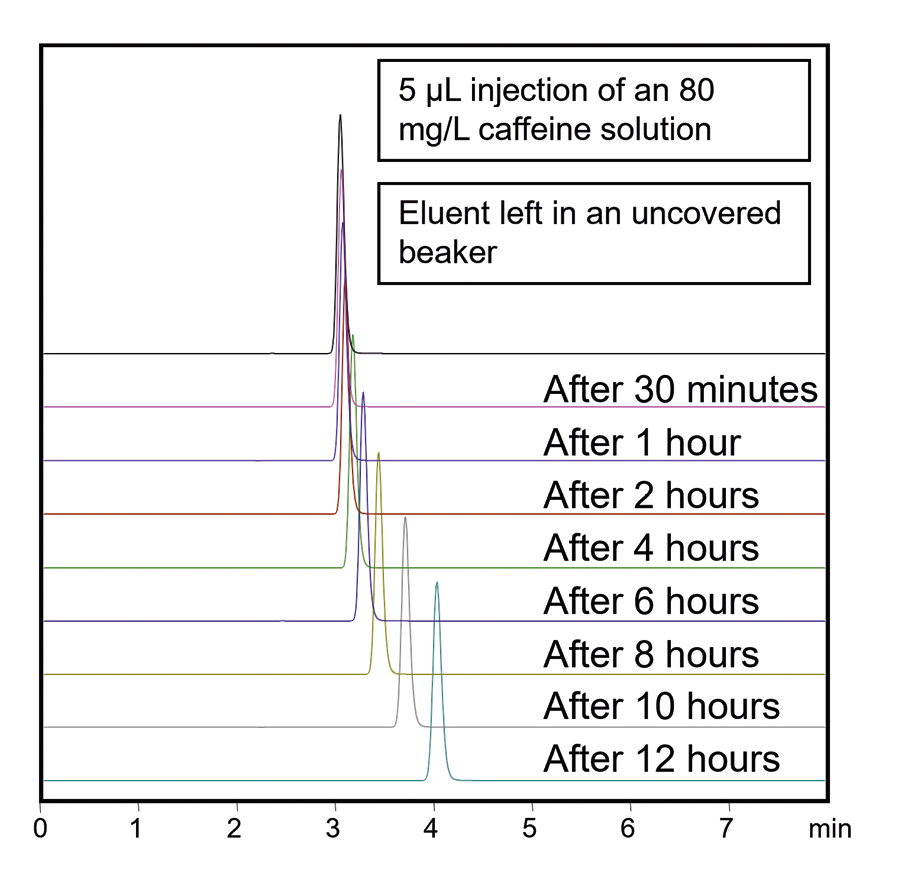
Mobile phases must be protected from evaporation and contamination. If bottles are left open or inadequately sealed:
- organic solvent content can change (e.g., acetonitrile evaporating from a water/acetonitrile mixture);
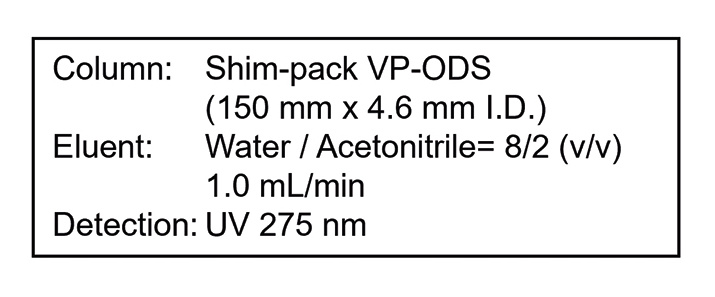
- the elution strength decreases over time, leading to progressively longer retention times;
- oxygen uptake or CO₂ absorption can alter pH, especially in unbuffered aqueous phases;
- bacterial growth can also form in aqueous mobile phases which can impact on the performance of the instrument.
Practical tips:
- Use properly sealed, chemically compatible bottles.
- Label eluents with preparation date, composition and preparer’s initials.
- Avoid exposing eluents to direct sunlight or to the cold airflow of air conditioners.
- Use carbon filters on the solvent bottles to limit solvent evaporation and improve the health and safety in the laboratory.
3.3. Inconsistent eluent preparation
Even when the correct solvents are used, preparation mistakes can lead to differences in elution strength. A classic example is the preparation of a “50 % methanol in water” mobile phase:
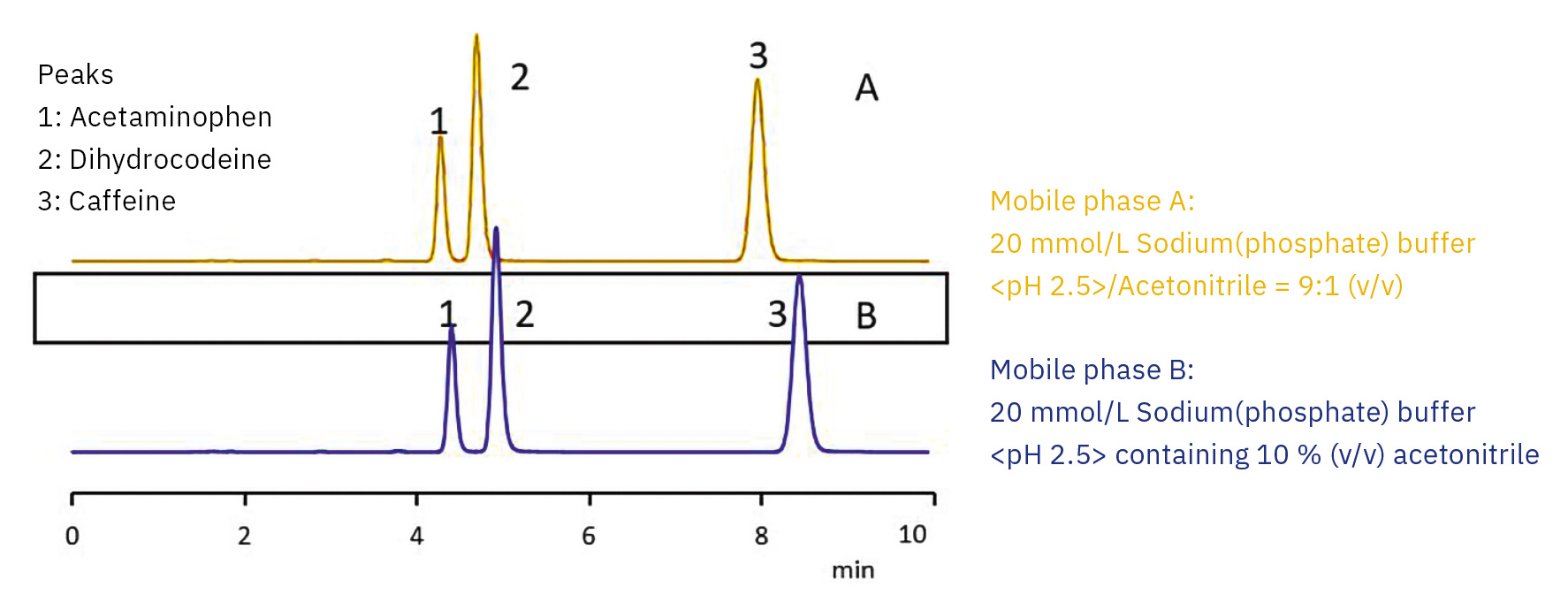
Tech 1:
- Water/methanol = 1/1 (v/v)
- Measure 500 mL of water and 500 mL of methanol separately, then mix them together.
- The total volume created is not 1 L but 0.94 L.
Tech 2:
- 50 % (v/v) methanol-water solution
- Add 500 mL of methanol to a 1-L volumetric flask and fill up to 1 L with water.
- The total volume created is 1 L, with a higher proportion of water when compared with the previous example.
Both analysts might call their solution “50 % MeOH,” but in practice these two solutions have different elution strengths, as seen in the following example with a phosphate buffer and acetonitrile. The retention times of the individual analytes fluctuate significantly and, in the worst case, can fall outside the identification time window.


Practical tips to avoid this:
- Always define whether concentrations are % (v/v), % (w/w) or % (w/v).
- Use volumetric glassware and written SOPs for eluent preparation.
- Whenever possible, have mobile phases prepared from concentrated stock solutions or directly by the instrument’s proportioning system.
- For critical applications, consider using commercially premixed mobile phases to eliminate operator variability.
4. Other causes of retention time drift
Beyond temperature, flow and eluents, several additional factors can cause retention time fluctuations:
- Insufficient buffer capacity or incorrect buffer pH
- Poor online mixing in low-pressure gradient systems
- A partially dried-out or contaminated column, especially after storage in pure organic solvent or 100 % aqueous phase in reversed-phase systems
- Column aging or damage (loss of bonded phase, voids)
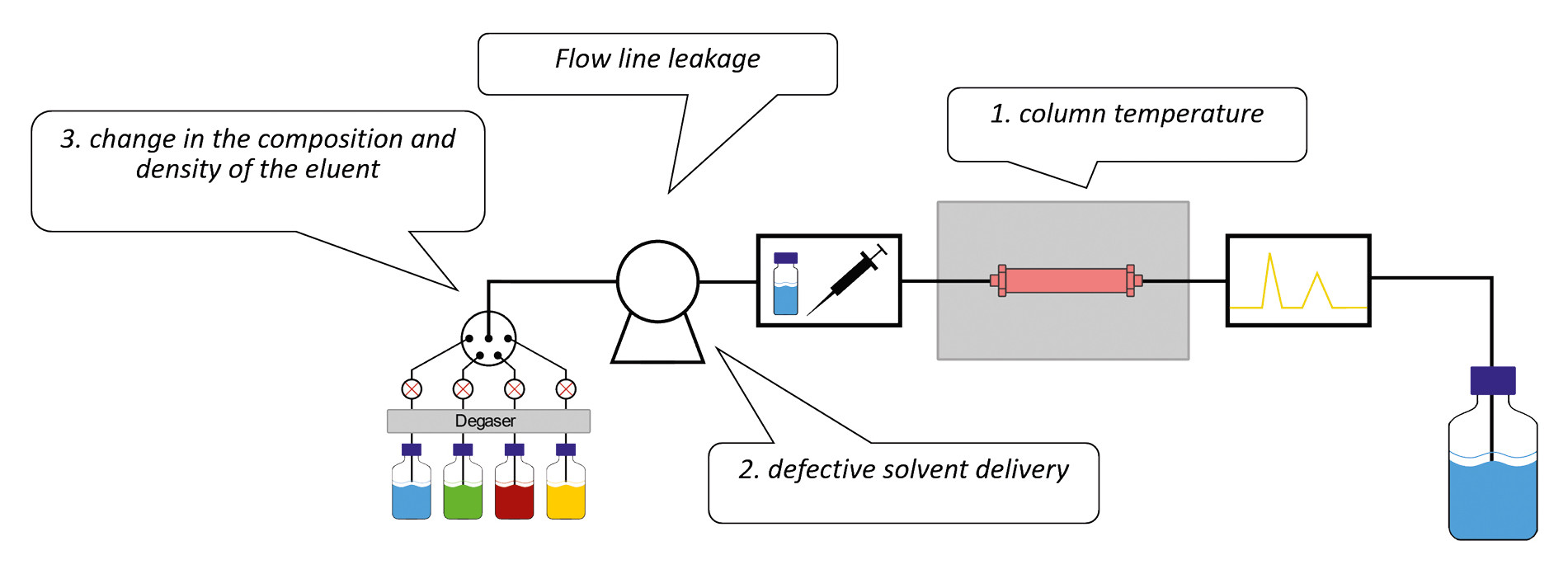
Practical tips if fluctuating retention times occur:
- Verify temperature control.
- Check the pump and flow calibration.
- Prepare fresh eluents using a validated procedure and compare retention times for reference standards.
- If problems persist, test with a new column to distinguish between column-related and system-related causes.


5. Practical checklist – keeping retention times under control
General
- Run system suitability tests with reference solutions and document retention times and resolution.
- Keep a column diary (number of injections, mobile phase used, storage conditions) and a maintenance log for the instrument.
Temperature
- Always use a column oven when retention time stability is important.
- Avoid large changes in laboratory temperature and air drafts around the column compartment.
Flow/Pump
- Perform regular pump performance checks and replace consumables on schedule.
- Monitor system pressure for unusual fluctuations or gradual changes.
Eluents
- Develop and follow SOPs for eluent preparation.
- Store eluents in sealed containers, correctly labeled and away from heat or direct sunlight.
- Allow adequate re-equilibration time after gradient runs or solvent changes, especially for:
- Normal-phase methods
- Reversed-phase methods with ion-pair reagents
- Methods using 100 % aqueous mobile phases
Problematic conditions to watch
- Reversed-phase runs with 100 % aqueous eluent
- Highly acidic or moderately to strongly alkaline eluents (typically pH > 7) on silica-based columns
- Long idle times without flow, especially with buffered or saline mobile phases
Final thoughts
Fluctuations in retention time are more than an annoyance: They directly affect the reliability of qualitative and quantitative results. Often small and easily overlooked issues – like a slightly warm laboratory, a worn pump seal or a loosely capped eluent bottle – are enough to destabilize retention and invalidate results.
By systematically considering temperature, flow rate, eluent preparation and column condition, most retention time problems can be diagnosed and solved quickly. Careful documentation, robust methods and a few simple daily checks go a long way toward ensuring that retention times remain stable – and that your HPLC data remains trustworthy.