What makes a gin special?
GC-MS analysis of aroma-relevant volatiles in gins
Waldemar Weber, Shimadzu Europa GmbH


This article marks the third and final part of a series on gin, a famous old spirit that has lately been experiencing a great resurgence of popularity. The appeal of any specific gin is often tied to its aroma and flavor – which are chemicals, after all – and gin makers need good tools to ensure their gin appeals to customers. So how should gin makers analyze their gin to better understand what works?
The global gin market has experienced robust growth in recent years, driven by a rising interest in premium and craft brands, enticing new recipes for mixed drinks and the seemingly unquenchable curiosity of consumers and producers alike for exciting new gin flavors.
Gin, a spirit with deep-rooted traditions, is defined by strict regulations in Europe and the UK. According to EU Regulation 2019/787, gin is a juniper-flavored spirit drink made by flavoring ethyl alcohol of agricultural origin with juniper berries (Juniperus communis L.), containing a minimum ABV (Alcohol by Volume) of 37.5 %. Categories such as “Distilled Gin” and “London Dry Gin” impose further standards. Distilled Gin must be produced exclusively through distillation with a minimum ABV of 37.5 % and should not be made using only flavoring essences. London Dry Gin allows a maximum methanol content of 5 g per 100 L and prohibits coloration or excessive sweetening.
Of course, you can flavor your own gin any way you wish at home, taking a base alcohol and adding juniper berries, and then … whatever else you might fancy: cinnamon stick, lemon peel, cucumber … anything. But most consumers prefer that someone knowledgeable has made certain that the gin they are drinking tastes as good – or better – than they expect. Producers in the highly competitive world of premium gin know that their success depends on delivering a flavorful gin that breathes originality, nuance, distinction and quality. Yes, flavor is the key ingredient in premium gins. But how do you ensure that you get it?
The role of terpenes
A big part of the answer is terpenes. Terpenes – including monoterpenes, sesquiterpenes and diterpenes – are a large group of naturally occurring compounds found in many plants, especially conifers. Terpenes are volatile compounds, meaning that they evaporate easily and can be detected by smell. Among the many roles that terpenes play is their significant contribution to characteristic smells – both in the plants themselves and as aromas in food and drink. Sesquiterpenes, for example, are a subgroup of terpenes that are often used to create earthy, woody and spicy aromatic notes. And, while terpenes are common enough, their extraction is not easy. For production of food, in particular, they are created by chemical synthesis.
So how do producers know which terpenes, in which amounts and in which combinations deliver that specific aroma and flavor that attracts customers to their gin?


Exploring gin aromas with GC-MS
This question prompted a gin-curious researcher to wonder whether gas chromatography-mass spectrometry (GC-MS) could be used to better identify and analyze the terpenes used in flavoring gins. He reasoned that finding a simple and precise method to do this would help producers in their arduous task of creating gins that continued to quench the thirst of discerning consumers.
He opted for a straightforward approach: 18 gin samples were collected from the UK, Austria, Germany and Japan. The selection encompassed a variety of styles, including alcohol-free products, saffron-infused gins and oak barrel-aged varieties. This diversity allowed for a comprehensive analysis of the different flavor profiles and production techniques employed across these regions.
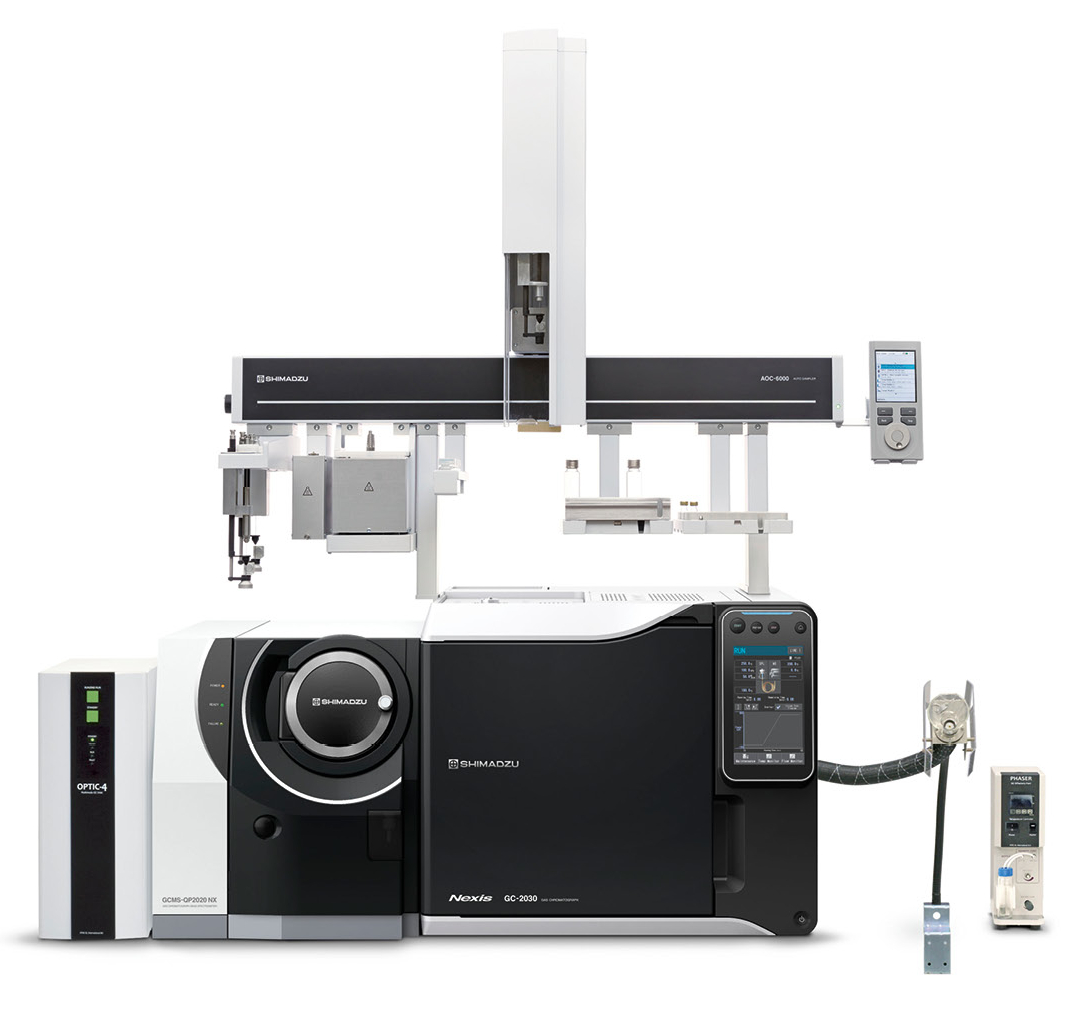
A GCMS-QP2020 NX from Shimadzu equipped with an Rtx-5MS GC column and an AOC-6000 sampler (Figure 1) were used to analyze the gin samples. The sample volume was 10 µL, and the temperature program used was 35 °C (1 minute), 8 °C/min to 280 °C. The helium carrier gas velocity was 35 cm/sec, and the SPME fiber assembly DVB/CAR/PDMS was set to 60 °C for 20 minutes.
| G1 | 27 | G10 | 12 |
| G2 | 20 Alcohol-free | G11 | 26 |
| G3 | 20 | G12 | 70 Saffron-infused |
| G4 | 68 | G13 | 61 |
| G5 | 40 | G14 | 61 |
| G6 | 54 | G15 | 67 |
| G7 | 39 Alcohol-free | G17 | 67 |
| G8 | 26 Alcohol-free | G18 | 67 |
| G9 | 26 | G18 | 70 Oak barrel-aged |
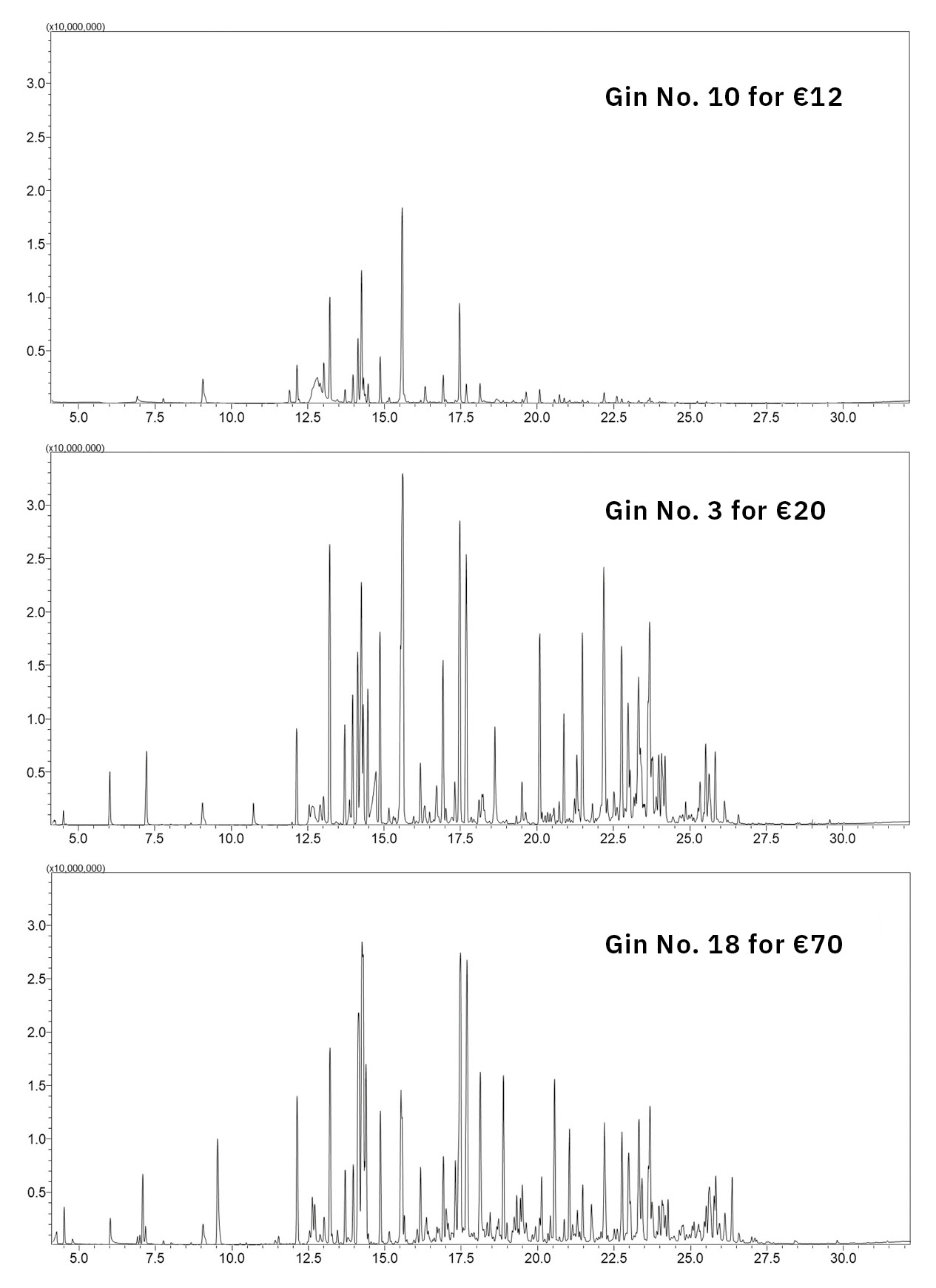
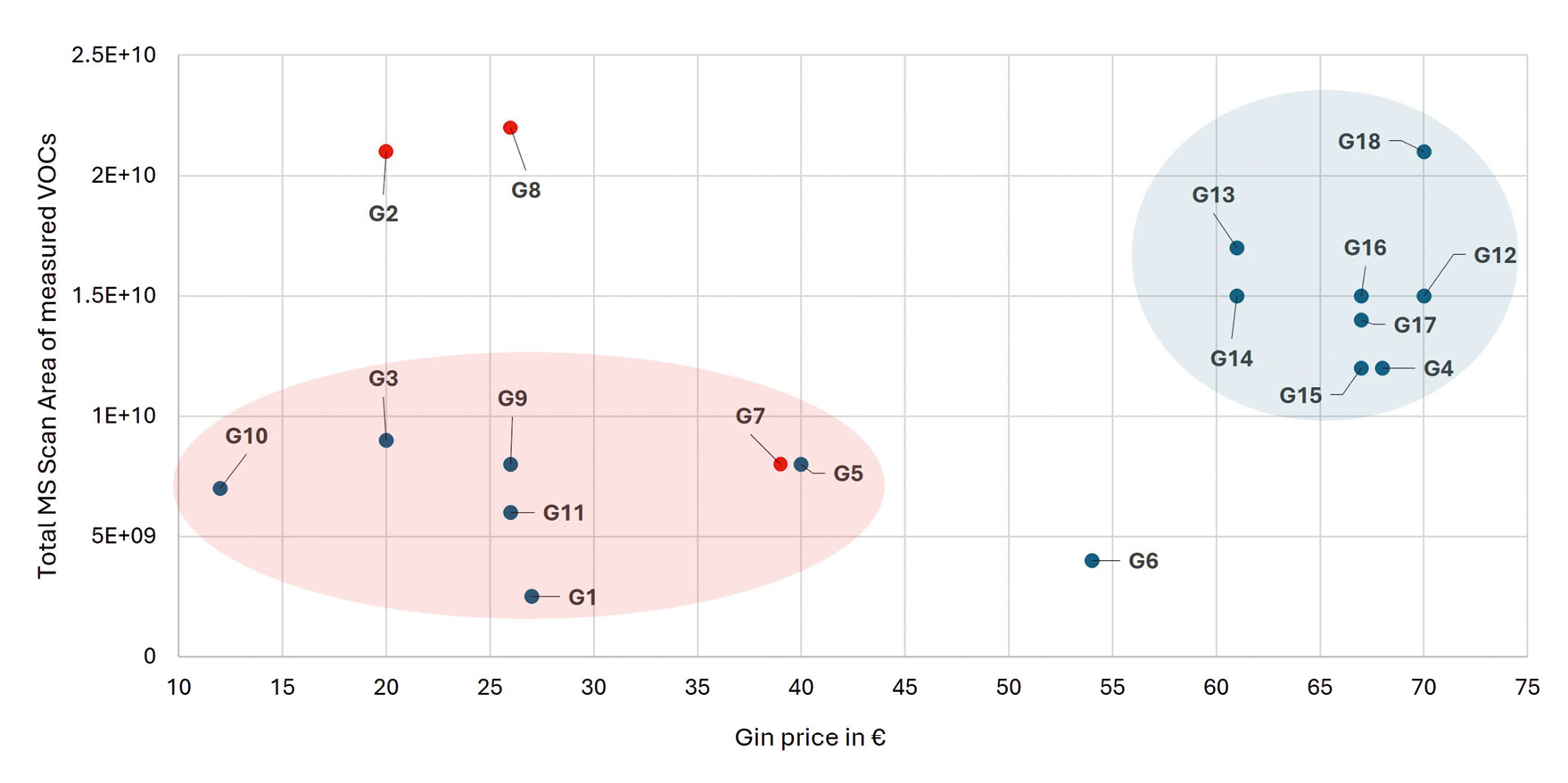
Table 1 shows a summary of the analyzed gin samples and their corresponding market prices. For a comparison of volatile compounds detected in measured samples, three gins of different price levels were compared. G10 is a low-priced gin, G3 is a medium-priced gin and G18 is a high-priced premium gin. The chromatograms of these gins are shown in Figure 2, displaying that both higher-quality gins (G3 and G18) contain significantly more volatile components than the cheapest gin (G10). Figure 3 gives a relative overview of all gin samples analyzed, illustrating a correlation between the price and the peak area of detected volatile compounds. This representation more or less indicates a direct relationship between a gin’s market value (i.e. its flavor and aroma) and its price.

Gin price vs measured content of volatiles
Premium gins scientifically have more taste
The study shows that approximately two groups of gins can be distinguished from the examined samples (colored in red and blue). Exceptions are the non-alcoholic gin varieties, where the content of volatile components is comparable to – or even higher than – that of alcoholic gins, despite their lower price. The explanation for this is the perceived necessity by manufacturers to compensate for the lack of alcohol’s flavor-enhancing effects by using higher amounts of aromatic compounds.
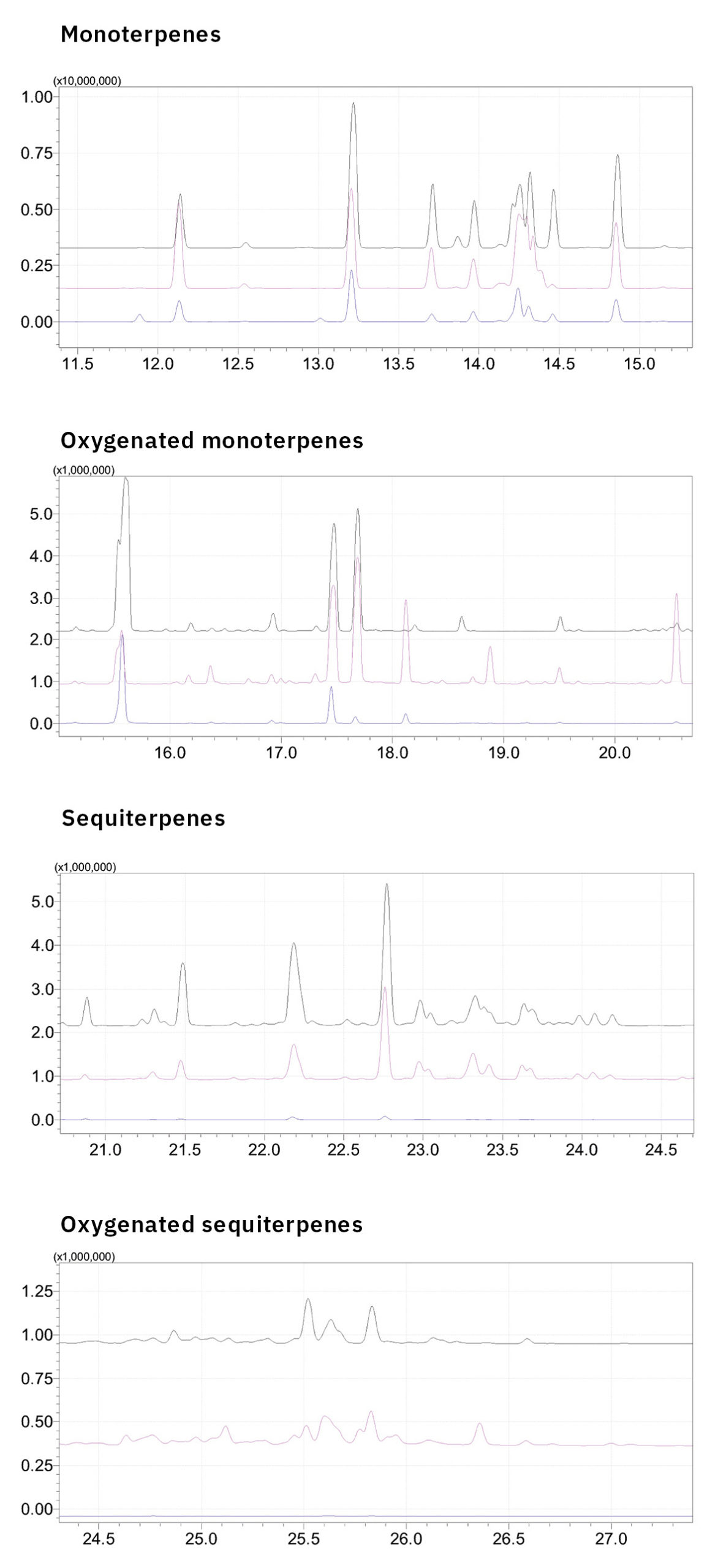
GC-MS technology allows for even more precise analysis through the use of multidimensional GCxGC chromatography, which offers significantly better chromatographic resolution. Nevertheless, a simple, one-dimensional GC-MS analysis also provides very insightful results. For example, the comparison of four terpene groups in the gin varieties studied is shown: (oxygenated) monoterpenes and (oxygenated) sesquiterpenes. From the GC-MS chromatogram, terpenes can be identified as m/z 93.
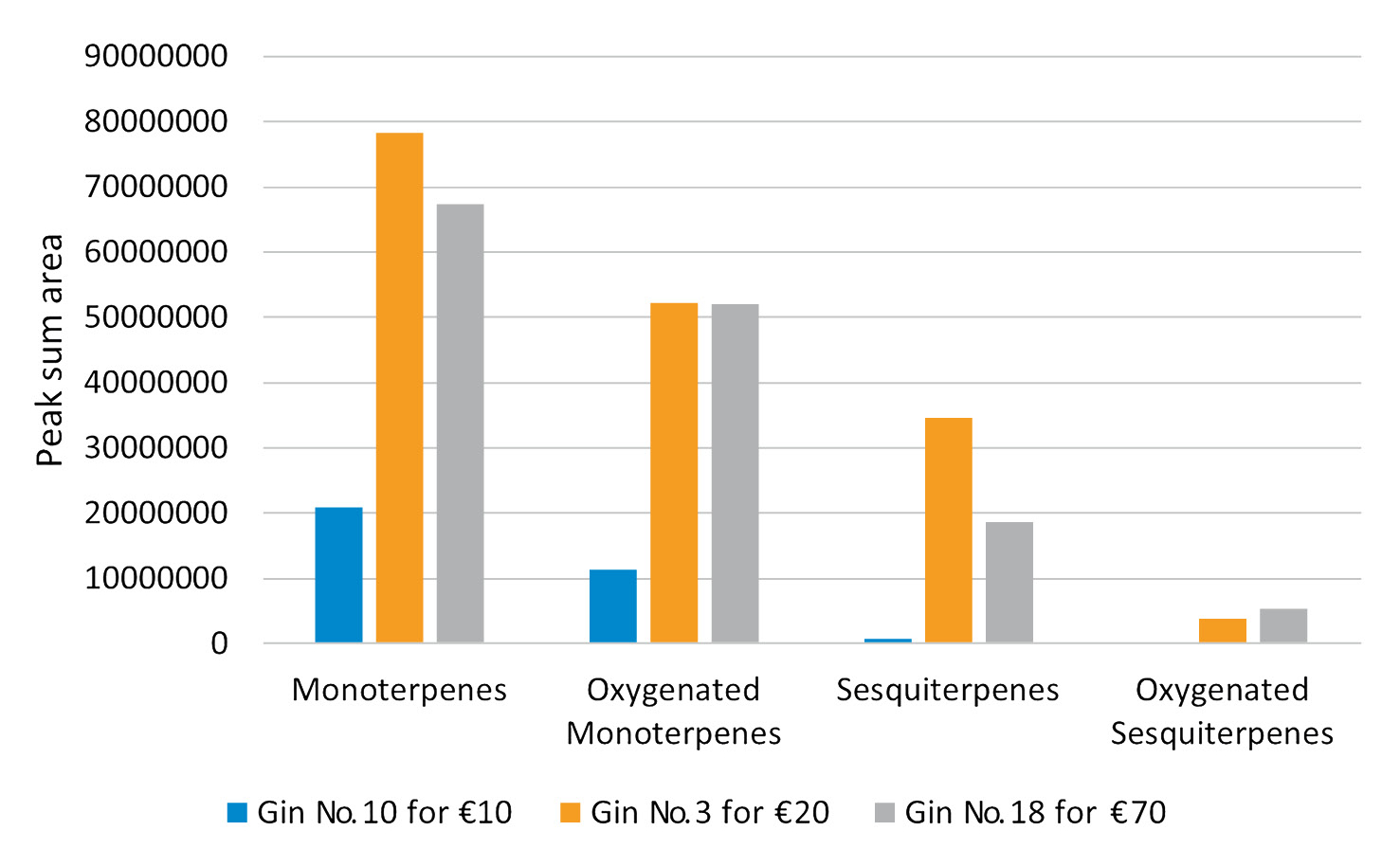
A clear chromatographic separation of these four groups is not possible; however, they can be approximately assigned chromatographically. The comparison of the terpene content in the three gin varieties is shown in Figure 4. Here, it is also evident that the amount of terpenes – so crucial to the aroma of gin – is significantly lower in the cheaper gin. Figure 5 summarizes the integrated areas of the terpene groups. The terpene content in the more affordable gin is lower; for sesquiterpenes, only trace amounts have been detected, which naturally has a strong impact on the aroma profile.
To sum it all up: In a study comparing 18 gin samples from different countries and price ranges, GC-MS revealed that higher-quality gins contain significantly more volatile compounds that are key to their aroma, especially terpenes like monoterpenes and sesquiterpenes. Cheaper gins tend to have fewer of these compounds, resulting in a less complex scent profile.
Even non-alcoholic gins can have high levels of aromatic compounds because manufacturers must compensate for the lack of alcohol’s flavor-enhancing effects. While advanced multidimensional GCxGC offers even better resolution, standard GC-MS still provides valuable insights into the chemical makeup of gin.
Tools to create the tastes of tomorrow
The aroma of gin depends heavily on its chemical composition. Chemical research has begun to identify and better understand how various elements contribute to a gin’s flavoring. GC-MS is a powerful and practical tool that can be easily used to analyze the volatile compounds in gin responsible for its aroma and flavor. Overall, GC-MS helps us better understand the connections among a complex mixture of flavors and aromas, production quality, price and the attractive taste profile of the gin in your drink.
These findings are of interest to scientists and the beverage industry, as they help improve their understanding of the specific chemical components that contribute to a gin’s flavor. GC-MS can also enable producers to more efficiently develop new recipes and to refine their existing products for greater customer appeal.